
The current surge in support for the Green Party is not just a headache for Labour; it’s a symptom of deeper public frustration with the UK’s political and economic consensus. The Greens more than doubled their vote share at the 2024 General Election compared with 2019, have received some of its highest poll ratings ever in the past two months, and announced in October that membership had increased beyond 100,000. While the communications skills of the party’s new leader – Zack Polanski – might be helping to an extent, this increase in Green popularity demonstrates something deeper about public frustration with how politics and the economy are working.
We can see the increase in the Greens’ popularity through Yonder’s Omnibus research.
- In the July 2024 election, 7% of voters across Great Britain voted Green (up from 3% in 2019)
- In April 2025, we found that:
- 5% of GB adults were ‘core Green voters’ (at least 9 out of 10 likely to vote Green)
- 17% said were ‘likely Green voters’ (at least 7 out of 10 likely)
- 44% were ‘Green considerers’ (at least 4 out of 10 likely)
- But by November 2025:
- 8% were core Green voters
- 21% were likely Green voters
- 44% were considerers
This trend isn’t isolated to the Greens. The concurrent rise of Reform UK – which currently polls over 30%, rising from 15% at the last election – signals a broader collapse in confidence in the traditional parties, driven by a shared, powerful force. But what’s driving this political shift and what can other parties and businesses learn from it?
Driver 1: crisis of economic confidence
Like Reform UK, the increased popularity of the Greens stems from frustration with the economic status quo. Supporters of both parties share similar frustrations, even if they often disagree on what should be done differently.
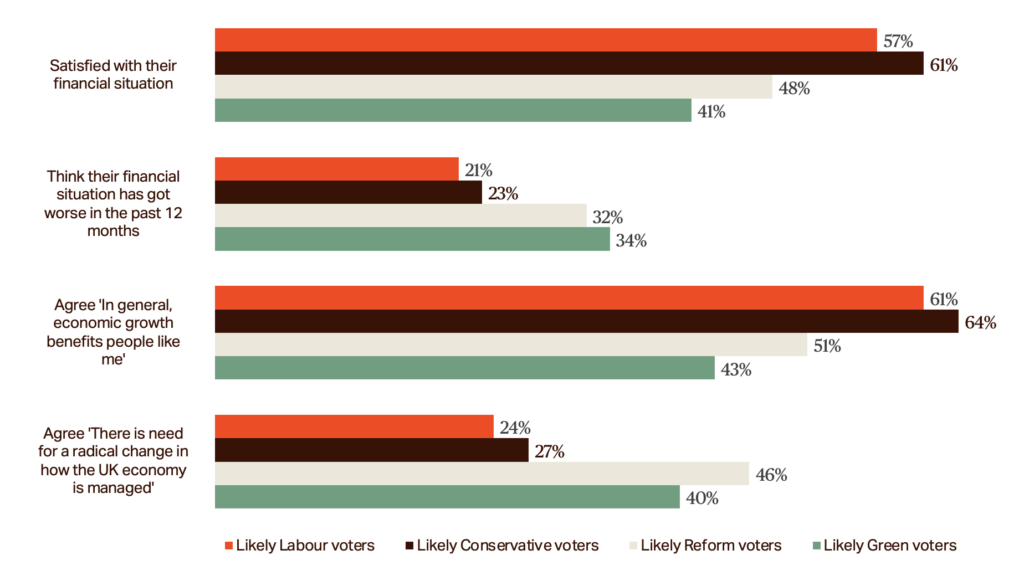
The common thread uniting these disparate voters is a profound crisis of economic faith. Our data shows that many supporters of both the Greens and Reform UK are fundamentally dissatisfied with their financial situation and are significantly more likely than Labour or Conservative voters to believe growth in the economy will not benefit ‘people like me’. They don’t want steady management; they demand radical change.
Driver 2: Labour’s missed connection
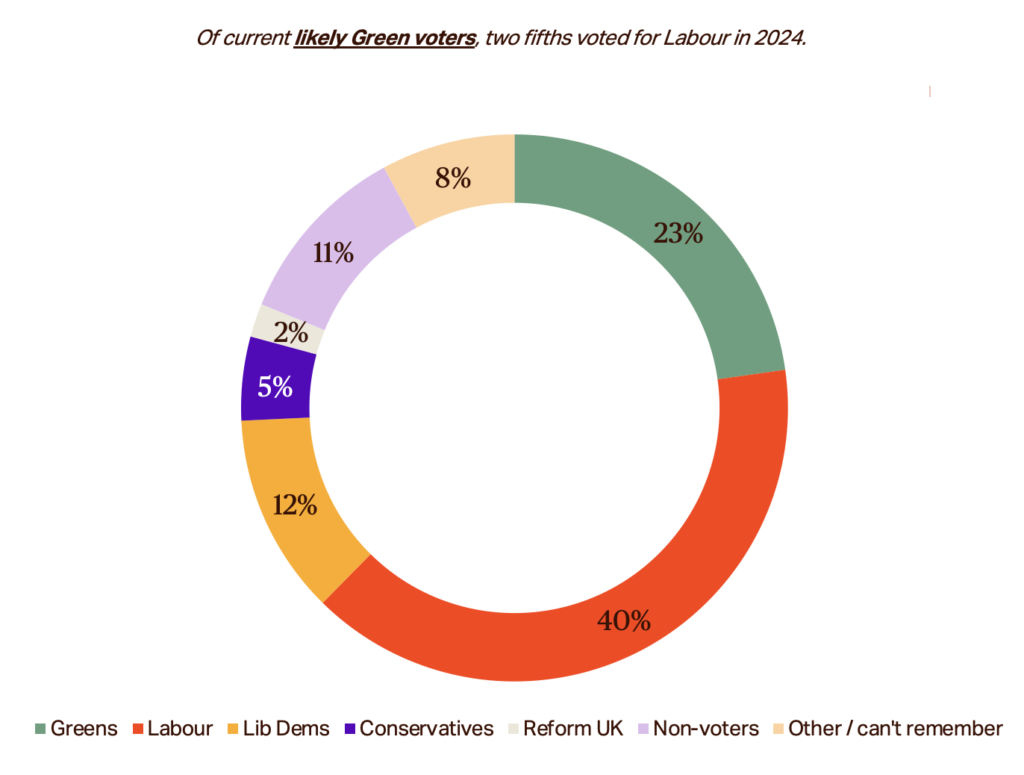
The Greens are winning on two fronts: retaining their 2024 voters with remarkable loyalty, while simultaneously capturing a huge swathe of disillusioned Labour voters.
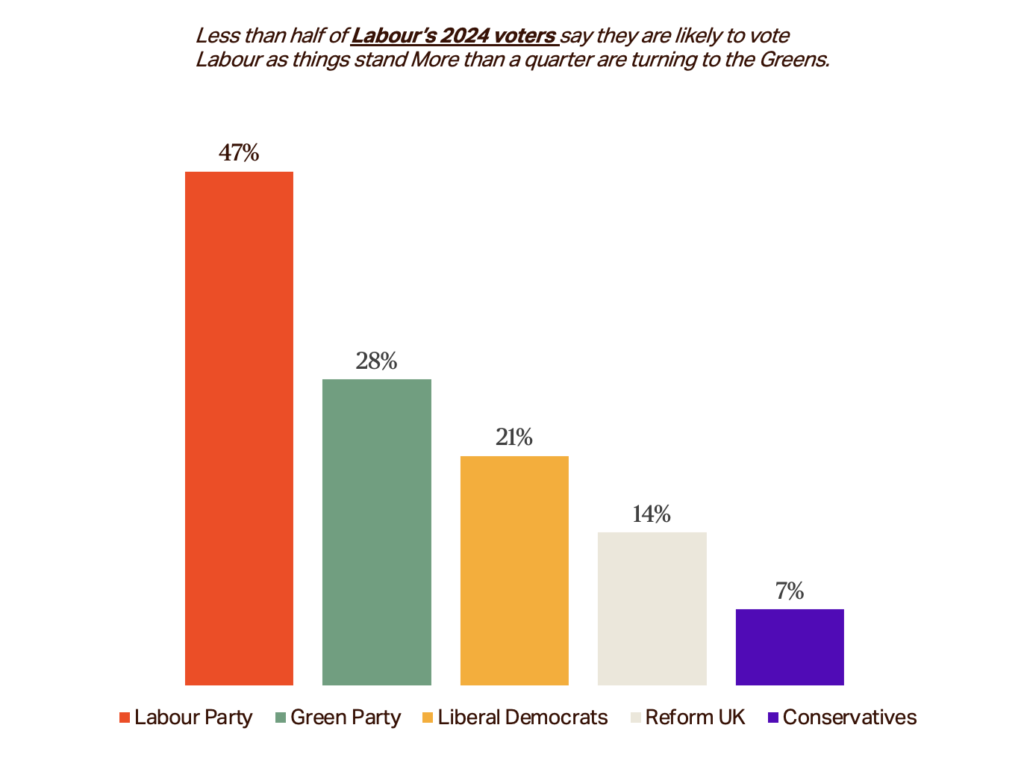
Potential Green voters are coming from the parts of the population that have traditionally looked first to Labour. In our October research, the Greens were the most popular party among women, 18–34-year-olds, graduates and private renters. This tells a clear story: young, renting, urban voters – some of those most exposed to economic insecurity, with least to lose and least persuaded by incremental change – are finding a new outlet in Green politics.
Driver 3: Demand for system change, not just policy change
Dissatisfaction with the economy and with the Labour government might unite Reform UK and Green voters, but similarities begin to disappear when we explore how these voters diagnose the UK’s problems and the changes they would like to see.
Potential Green voters are much more likely than the average voter to think that opportunities in this country are limited to too few people, that immigration has on balance improved this country and, of course, that man-made climate change is the greatest threat to the future of the planet. They disagree with many Reform UK voters on these points, which is why winning over both types of voter is challenging.
Indeed, many Green voters tend to align ideologically with Labour voters. They share a conviction that ‘the divide between the haves and the have-nots in society is getting bigger’, that ‘some companies earn so much profit that it just can’t be justified’ and that ‘government needs to do more to regulate how businesses behave’. This, combined with widespread permission that economic growth would benefit ‘people like me’, perhaps helps to explain why many Labour and Green voters say that ‘it is more important to focus on fairer distribution of wealth than to worry too much about economic growth’. For these voters, fairness now trumps economic growth.
Labour’s strategic dilemma
Considering many of these likely Green voters voted Labour in 2024, Labour will be keen to win as many of these voters back as they can. It is possible that some will move back to Labour when the time comes (61% of likely Green voters say they’re also considering Labour – for now), but the threat is currently significant enough to require a change of tack.
Labour is currently caught between three competing paths:
- Bet on growth: double down on growth and fiscal prudence will bring, hoping an economic upturn will soothe discontent.
- Reclaim fairness: lean into the Greens’ narrative of redistribution and corporate accountability.
- A third way: Forge an industrial strategy that combines investment to drive economic growth with emphasis on fairness and redistributive elements.
Whichever path it takes, Labour faces the challenge of persuading voters that it has a consistent strategic vision for the country and is not changing its mind every three months. And what is unlikely to work is an attempt to maintain the broad coalition of 2024 Labour voters and to be all things to all people. Those attempting to influence the government’s economic agenda should demonstrate an understanding of its strategic challenge and how any proposed policy solutions can be framed as part of the response.
Anticipating the new agenda
As well as demonstrating an understanding of the government’s travails, businesses should also take note of the societal trends we see. Our research suggests that we are in a new era in which themes of agency and fairness have superseded old themes of growth and opportunity, and in which expectations on businesses are already evolving.
Businesses should prepare for this new era by:
- Building credible narratives regarding fairness and contribution (e.g. tax contributions, executive remuneration, salaries, environmental performance).
- Visibly partnering with local communities to demonstrate a commitment to affordability, community impact and/or environmental sustainability.
- Scenario-planning to prepare for a stronger policy emphasises on regulation and redistribution if Green ideas influence Labour policy-making.
What next?
Whether the Greens popularity surge continues or not is secondary. The conditions that created it – economic pessimism, the demand for fairness and the collapse of faith in the status quo – are here to stay. Political parties and businesses that fail to understand and adapt to these fundamental shifts will find themselves on the wrong side of the UK’s emerging political fault line. Let’s discuss how our intelligence can help you anticipate what’s next and build a response that wins, get in touch today.